The Power to See: How a 25-Year-Old Pair of Sunglasses Got Its First Ad Campaign
By Lindsay Hiebert, Founder — August 2026
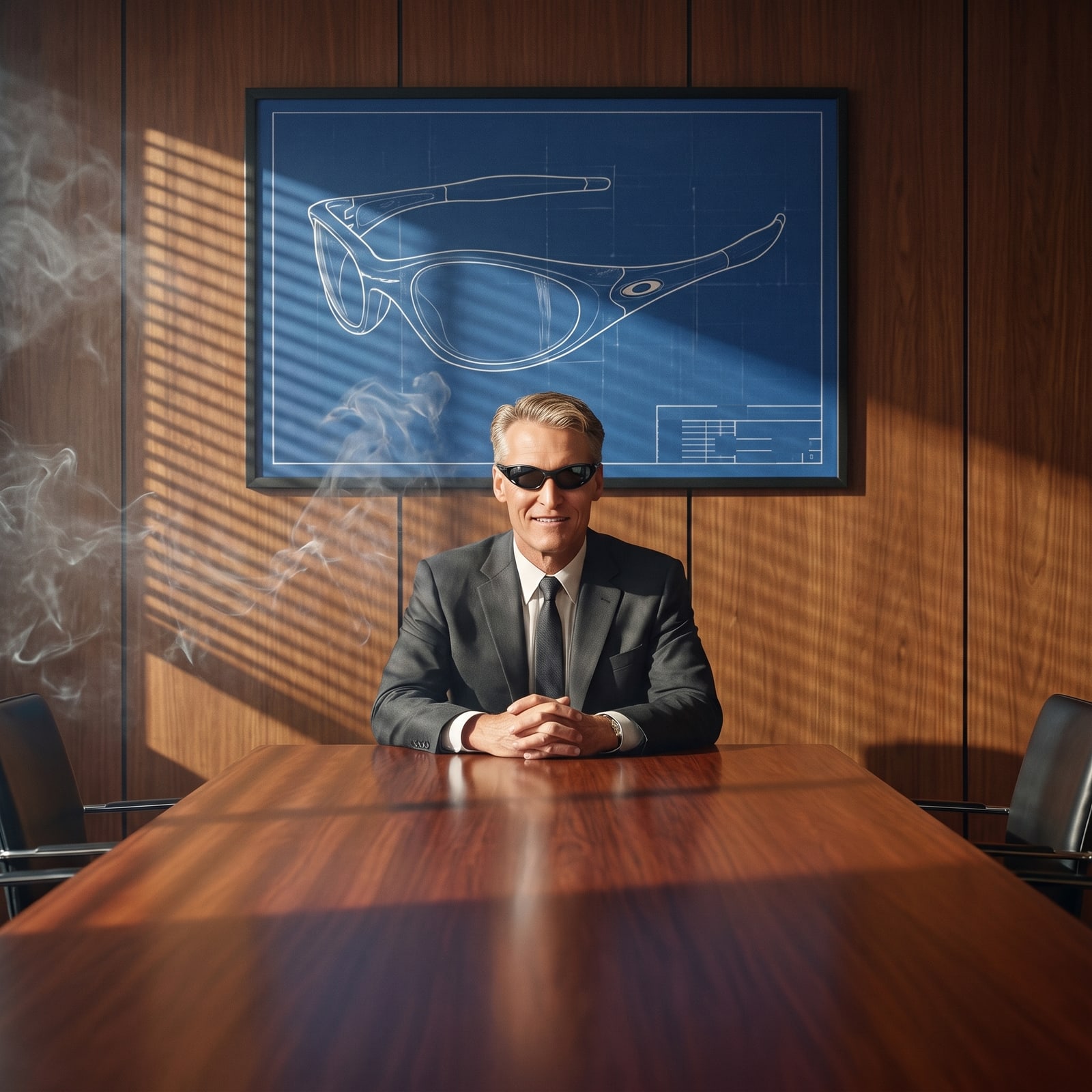
Hindsight is 20/20. It’s also worthless.
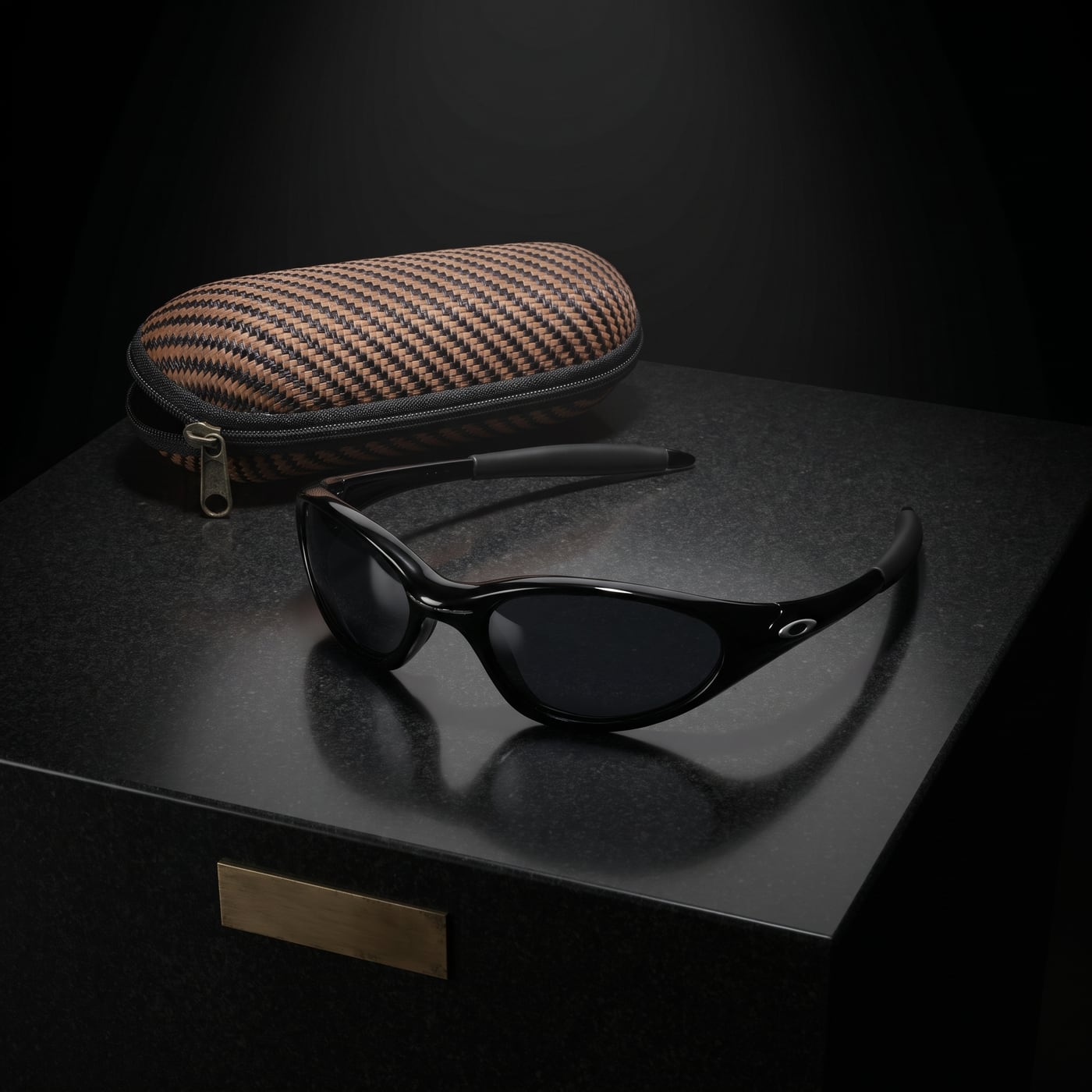
In 1999 Oakley CAD-sculpted a wraparound called the New Eye Jacket — a design so far ahead of its moment that decades later the company enshrined it in its own museum series. Mine never made it to a pedestal. Polished Black, Black Iridium, original woven case, twenty-five years of being exactly right. The design got a museum. The look went to work.
This week I finally gave those glasses the ad campaign I could always see but could never show: a Mad Men boardroom with the frame’s blueprint on the wall behind me. A windsurfer frozen mid-loop over a golden wave. The glasses and their case under a museum spotlight on black granite. A dusk-to-dawn split of the man who was told the look was over and the man who saw what came next. And a black-and-white reveal — glasses up, eyes open.
Every image was generated in CharacterCanvas, the app I built end-to-end with Claude Code. One reference photo per image. One credit each. Seconds, not shoots.
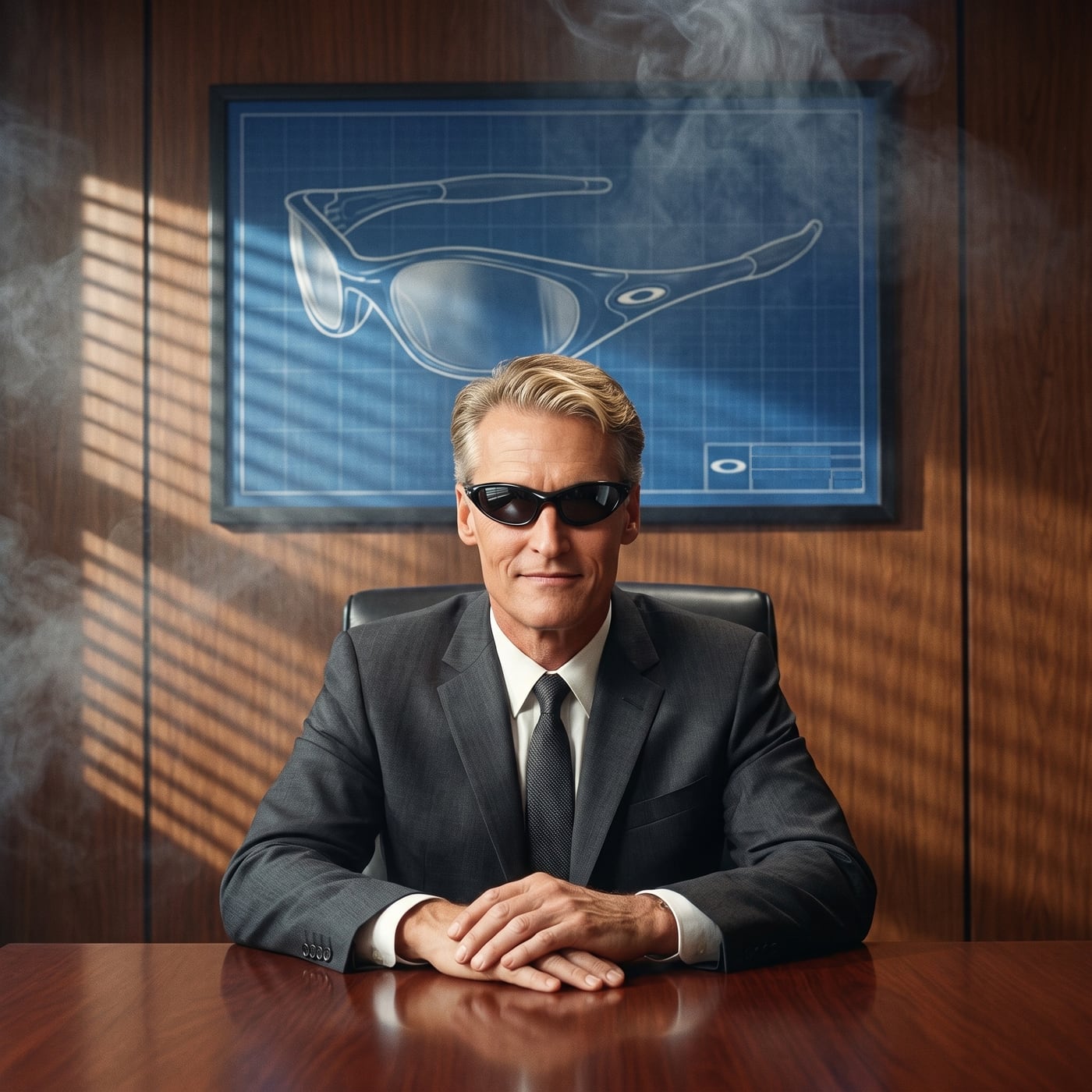
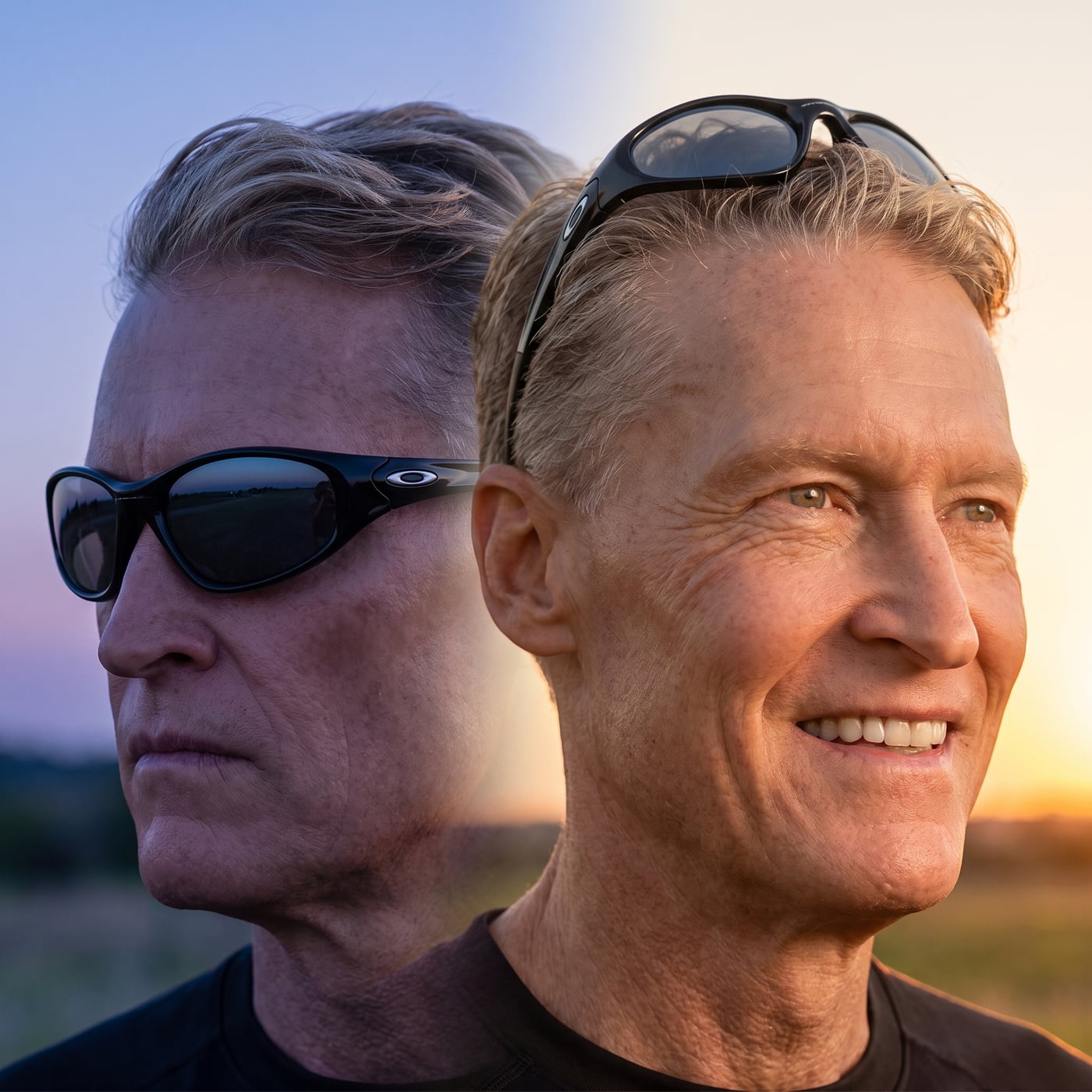
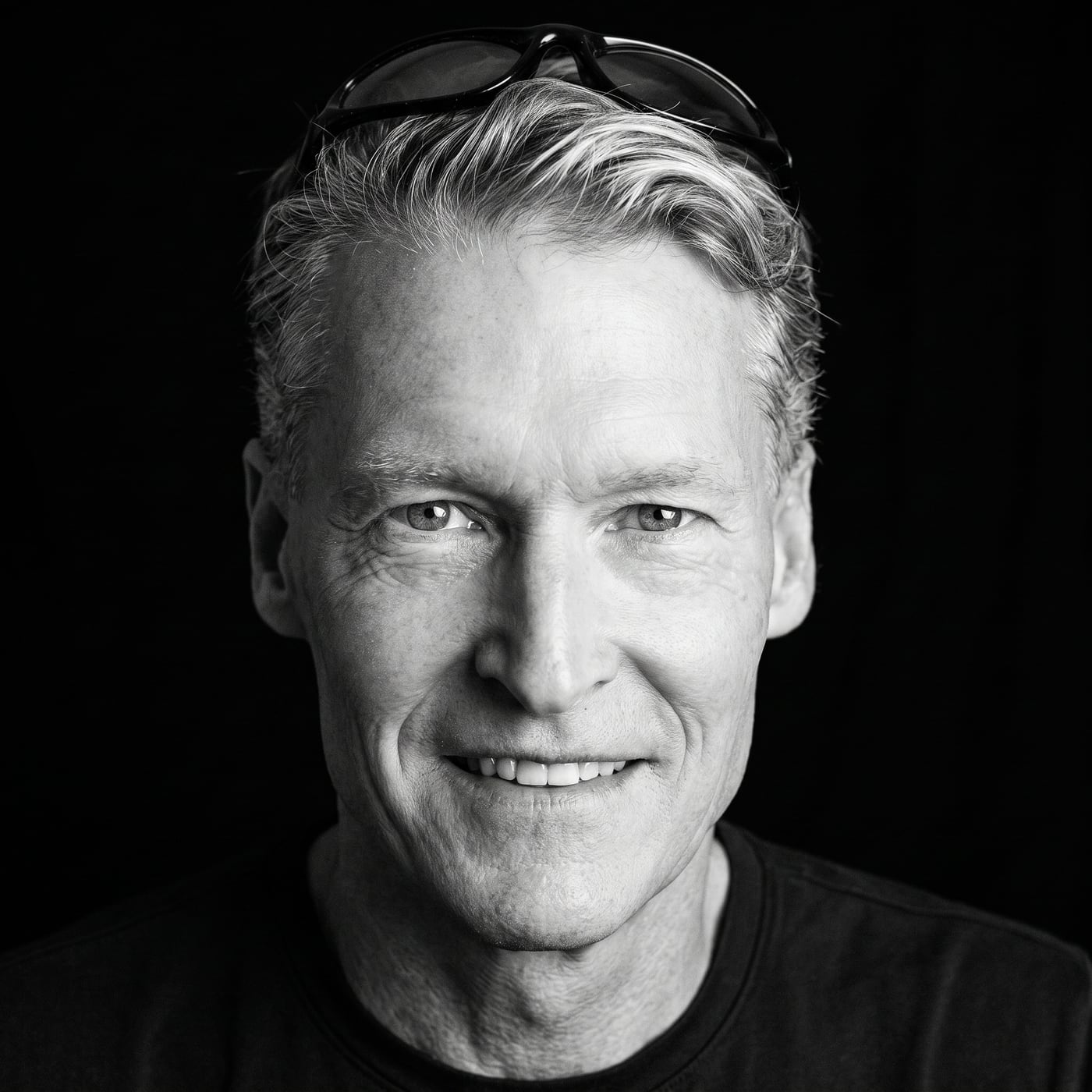
Then I did something founders usually avoid: I benchmarked my own product against ChatGPT and Gemini — identical prompts, identical reference photos — and committed to publishing the results either way.
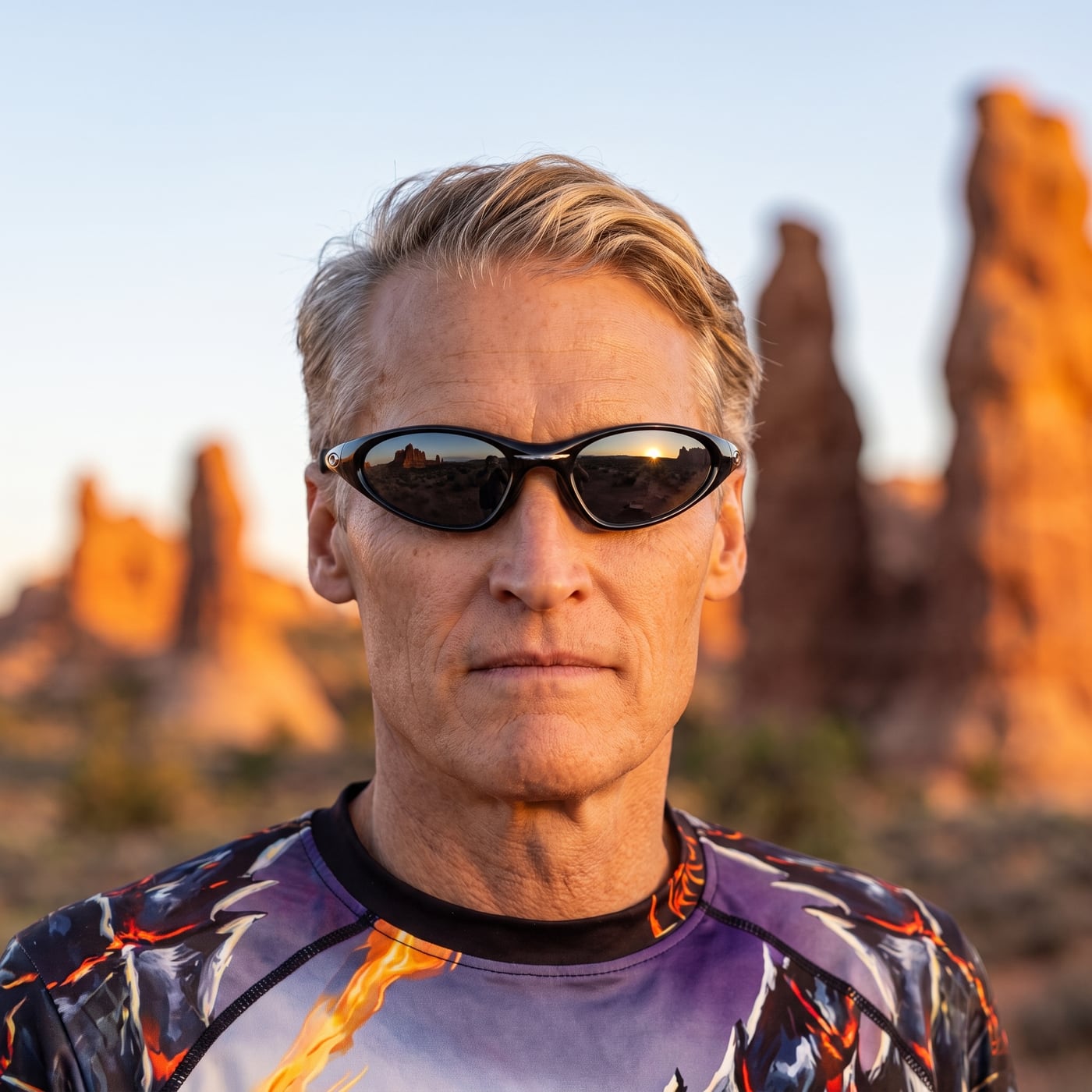
Here’s the honest scorecard. CharacterCanvas won three of the five ad categories. It was the only tool of the three that delivered finished advertisements — headline set, layout composed — in a single pass. And it produced the single best image of the entire experiment: a portrait of me at “Arches National Park” at sunset, desert reflected in the lenses, that people who know me cannot pick out as generated. First try. One photo. One credit.
It also lost a category, and the loss taught me more than the wins. Heavily stylized scenes — period costume, dramatic relighting — can drift a face toward someone older, smoother, more generic. Every tool struggles with this, including the giants. The difference is what you do about it. During this campaign we isolated the drift’s causes (a single word like “platinum” in a prompt can silently age you a decade) and turned the fixes into standard guardrail language that now ships in our prompting guidance — and, as of August 3, live in the app itself, correcting the drift before you ever see it.
That’s the deeper story, and it’s why the product exists. Every reinvention — of a brand, a product, yourself — starts as a picture only you can see. Most ideas don’t die from weakness; they die from invisibility. Visualization is the rarest business skill nobody teaches. The gold was always between your ears — whatever the mind can conceive and believe, it can achieve. What’s changed is the last step: high-fidelity visualization used to require a studio, a photographer, a budget, and weeks. Now it requires the phone in your pocket and a paragraph of intent.
Not AI-artificial. Authentically yours: your face, your product, your idea — still looking like you. That’s the entire bar we hold ourselves to, and it’s printed at the bottom of every page on this site: AI portraits that still look like you. One photo, any style, in seconds.
The sunglasses waited twenty-five years for their campaign. Your idea shouldn’t have to.
See the full campaign in the Showcase, try it in Create, and for the technical deep-dive on why consumer AI apps outperform their own APIs — and what we’re building about it — read the companion essay, “The Vanishing Horizon.”
Every image in this post was generated in CharacterCanvas v3 from a single reference photo. No affiliation with Oakley — just a fan tribute and twenty-five years of good taste.
Get the next post
One honest note when we publish. No spam, ever.